












AI Search Optimisation
AI search is not a separate channel you bolt on. It draws on the same site, the same content and the same credibility signals your SEO already depends on, then judges them against a different set of rules. We scope every engagement to the business in front of us, because a national ecommerce brand and a three-location psychology clinic need very different work. What stays constant is the sequence: find out how AI search currently sees you, fix what is stopping it seeing you properly, then give it better material to work with through content that is built to be quoted.
What an AI SEO agency actually does
An AI SEO agency optimises your business to be found, understood and cited by AI search tools such as Google’s AI Overviews, AI Mode, ChatGPT and Gemini. The work spans technical accessibility, content structure, entity consistency and off-site credibility, so that large language models can retrieve your information and repeat it accurately.
The mechanics differ from traditional search in one important way. A search engine matches a query to a list of pages and hands you ten links. An AI system takes your question, breaks it into several sub-questions behind the scenes, retrieves passages from many sources to answer each one, then assembles a single response. That process is called query fan-out, and it changes what gets rewarded. You are no longer competing for a position. You are competing to be the passage worth quoting.
Which means the unit of optimisation shrinks. A page can rank well and still be useless to an AI system, because the answer it needs is buried three paragraphs into a section, hedged, or split across a tab the crawler never opened. Clarity beats persuasion here. Content that is hard to interpret is less likely to be used.
The terminology can be broad:
- Traditional SEO optimises for ranking position in a list of links. Results appear as blue links on a search results page, visibility is measured in rankings, impressions and clicks, and the deliverables are technical fixes, keywords, content and acquired links.
- Generative engine optimisation (GEO) optimises for being retrieved and cited inside a generated response. Results appear in AI Overviews, AI Mode, ChatGPT, Gemini, Claude and Perplexity, visibility is measured in citation and mention frequency and share of voice, and the deliverables are entity consistency, citation-ready passages and off-site credibility.
- Answer engine optimisation (AEO) optimises for being the direct answer to a specific question. Results appear in featured snippets, voice answers and AI-generated answers, visibility is measured by answer capture rate for target questions, and the deliverables are question-and-answer structure and structured data.
We call all of it AI SEO, because in practice you cannot do one without doing the others. The labels matter less than whether the work is happening. Read more on what Google’s AI Mode means for Australian businesses.
Our approach to AI search optimisation
Traditional practices like keyword research and technical SEO still carry weight. What changes is that we also must account for how AI models read, weigh and reuse what they find, which rewards originality, depth and clarity over keyword placement.
Optimising for AI-driven search
We start by working out how AI systems currently interpret your category and where your business sits in that picture. That means looking at which sources get pulled into answers about what you do, what those sources have in common, and where the gaps are. Sometimes the fix is structural. Sometimes you are simply absent from the conversations that matter, and the work is to earn a place in them.
Creating targeted and informative content
Content that gets cited answers the question early, in full, and in language a model can easily use. We organise material so the hierarchy is obvious, put the answer near the top rather than saving it for the payoff, and strengthen the experience, expertise, authoritativeness and trustworthiness signals underneath it. Depth still matters. A thin page that happens to be well structured will not carry you.
Monitoring and adapting
Then we watch what actually changes. That covers referral traffic arriving from LLMs, how your brand is described across the major AI tools, and how that compares to your competitors over time. AI search moves quickly enough that a strategy set in January can be aimed at the wrong thing by June, so the plan gets revised against what the data shows rather than what we assumed at the start.
"Whether someone's using Google or asking an AI, the aim is to be the first and most relevant answer they see."
Cameron Milner - SEO & Data Director at SIXGUN
What we do when we take on AI SEO
Every engagement is scoped to the business, but the work usually covers:
- Technical accessibility so AI crawlers can reach your content, including anything that only appears after JavaScript runs.
- Structured data using the schema types that fit the page, typically Organization, LocalBusiness, Article and Product, so machines can understand what a page is about and which business it belongs to.
- Citation-ready content rewritten so each section answers its own heading in a passage that stands on its own.
- Entity consistency so your business name, location, services and credentials describe the same organisation everywhere they appear.
- Topic clusters built around how AI systems understand relationships between concepts, rather than around isolated keywords.
- Off-site brand mentions, where your situation calls for it, from sources with genuine standing in your industry. The goal is not volume but consistency and credibility. Often this requires formal sponsorship that will come with a separate cost.
- Correcting what AI gets wrong about your business, from outdated service lists to details that were never true.
- Measurement across the AI tools your customers actually use, benchmarked against your competitors.
When AI is saying the wrong thing about your business
This one deserves more detail. AI tools regularly state things about businesses that are outdated, incomplete or simply incorrect. Old pricing. Services you stopped offering years ago. A location you moved out of. In some cases, details that were never true and appear to have been inferred from a similarly named business.
You cannot edit a model’s output directly, and anyone who tells you otherwise is overselling. What you can do is change what the model draws on. We trace the claim back to the sources feeding it, correct the ones you control, and, where it makes sense for your situation, work on the ones you don’t. It takes time and it is not guaranteed, but it is more often fixable than not, because the sources feeding the claim are usually ones we can identify.
We start with an audit of how AI search currently sees you
Before anything gets changed, we establish where you actually stand. We review which questions in your category trigger AI answers, who gets cited in them, and what those sources are doing that you are not. That baseline is what everything afterwards gets measured against.
From there the sequence runs technical, then content, then authority, with measurement throughout. Technical comes first because there is no point improving content a crawler cannot reach. Content is next. That is where most of the movement comes from, and it is the stage where clients start seeing something change. Authority is the slow one. Off-site credibility takes the longest to build and compounds least predictably. Measurement runs alongside all three so we can tell which of them is actually doing the work.
We will not promise you a position in an AI answer, because no such position exists to be sold. There is no ranking to buy, no algorithm to game, and no shortcut that survives the next model update. What we can promise is that the fundamentals we work on are the ones that have held up so far, and that you will know exactly what changed and why.
Want to see the problem for yourself before you talk to anyone? Open ChatGPT and ask it to recommend a business like yours in your city, then ask what it knows about your company by name. It is a faster way to find out where you stand than any audit summary. Our guide to ranking better in ChatGPT covers what to do about what you find.
84% increase in organic purchasers.
289% increase in organic sessions.
2,772 increase in ranking performance for tracked keywords.
98% increase in organic conversions.
52% increase in organic sessions.
608 increase in ranking performance for tracked keywords.
111% increase in organic sessions.
436% in organic key events.
1,601 increase in ranking performance for tracked keywords.
142% increase in organic revenue.
426% increase in Google Ads revenue.
95% increase in Meta Ads revenue.
211% increase in organic sessions.
182% increase in organic conversions.
3,282 increase in ranking performance for tracked keywords.
Novotel
Novotel Melbourne Airport was a new hotel location opened in July 2024 to provide a premium travel base for travellers transiting through Melbourne.
Ray White Commercial
Ray White Commercial Western Sydney are a team of commercial real estate specialists operating in and as part of the Western Sydney community.
Infotrust
Infotrust is Australia's leading ASX-listed cyber security and technology services provider, headquartered in Sydney with offices nationwide.
Peter Sheppard
With flagship stores in Melbourne, Sydney and Brisbane, Peter Sheppard have been providing unrivalled service and the perfect fit for over 50 years.
Good Marks Tattoo
Good Marks Tattoo is a local tattoo parlour on the edge of Melbourne’s CBD in West Melbourne.


Meet our
AI SEO team
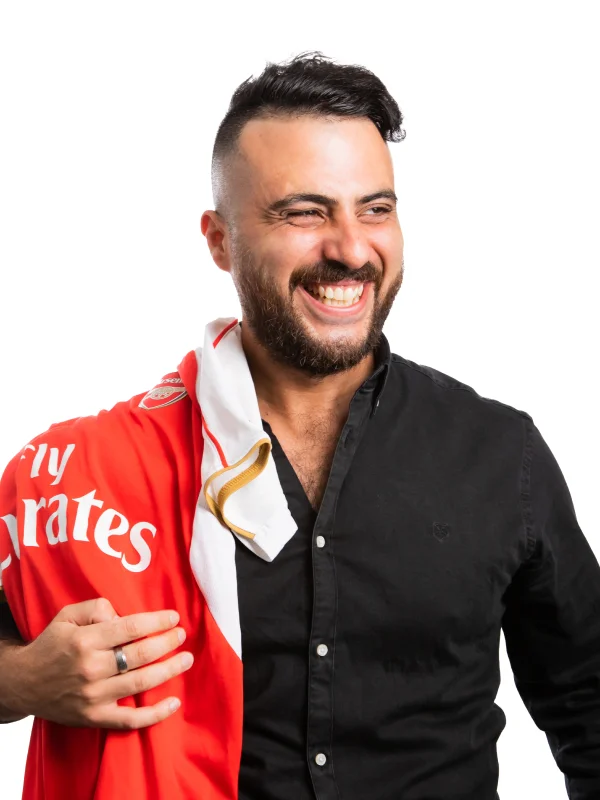
Harris Panayi
Client Services Director
About
Harris has been part of the SIXGUN fabric nearly since its inception, running the Client Services department and specialising in client, staff, and escalation management, along with recruitment, retention, and business growth. A strong leader at SIXGUN whose all-rounder approach ensures maximum client and staff satisfaction, Harris also takes the lead on company events and culture.
Experience
After almost a decade in the digital marketing landscape, Harris has worked in almost every facet of the industry, including SEO, SEM, social media, site design and development, lead generation and affiliate marketing, account and partnership management, and general staff management positions.
Harris’ primary goal is to foster harmonious relationships between agency and client, ensuring business success from a technical performance perspective is at the forefront, while ensuring relationships with clients operate so effectively that clients are able to see us as a part of their business. Harris strives to create a family-style partnership environment within his department, where partnerships organically grow over time and clients stick with us for the long term.
Fun Fact
Harris is a true foodie, soccer and music enthusiast at heart. You’re most likely to find him in the kitchen, watching his beloved Arsenal, or strumming his Fender Stratocaster.

Matthew Cullen
Strategy Director
About
Matthew leads the strategy and sales direction of SIXGUN, helping to develop a true client-centric mentality that puts our clients’ needs at the heart of our digital marketing solutions.
Experience
With more than ten years of experience in the digital marketing industry, Matthew uses his wealth of experience to guide campaigns from the outset, helping set realistic expectations that don’t promise the world. When talking strategy, Matthew understands no question is too small—choosing a digital marketing partner can be a difficult task and half the battle is finding a team you genuinely want to work with over the long term.
Fun Fact
A foodie at heart, Matt enjoys cooking (hopefully) delicious food, wining and dining with friends and family, and the occasional round of golf.

Cameron Milner
SEO & Data Director
About
Leading the SEO, content and data teams at SIXGUN, Cameron brings a wide breadth of knowledge in technical implementation, holistic and integrated marketing approaches, and creating strong resources for the SIXGUN team and clients alike.
Experience
With more than a decade of experience in SEO across all verticals, including more sensitive and highly regulated industries, Cameron has done SEO for outfits of all sizes, ranging from one-person businesses all the way up to large multinational and publicly traded companies. He’s also collected experience in CRO, data analytics, web design and development.
Fun Fact
Cameron loves spending time with his family and has a passion for serving his community. He’s currently the Deputy Controller for Training at his local State Emergency Services (SES) unit and holds a number of specialist skillsets, some of which he’s also a trainer and assessor in.

Nando Iorio
Lead Account Manager
About
Nando is an integral part of the Account Management team at SIXGUN, helping to develop a true and transparent business-client relationship while aiding and managing the day-to-day needs of our clients’ digital marketing solutions.
Experience
With over a decade of industry experience in both traditional and digital marketing as well as experience in the creative field, Nando takes a warm and holistic approach to client services.
Fun Fact
When Nando isn’t focused on all things SIXGUN he enjoys playing guitar and trying to set a new high score in classic video games. Nando also enjoys photography and making short videos in his spare time.

Christopher Zerafa
Lead SEO Specialist
About
Christopher began his SEO journey by curating a variety of music websites and then soon learned about the magic of SEO. Since then he has acquired almost 10 years of experience in the SEO landscape.
Experience
Chris has worked in a variety of niches from fashion to pet supplies. His passion lies in all things visual and content related, as he also studied graphic art and design. He has strong management experience within the SEO field and the wider community sector.
Fun Fact
Christopher (Chris Z or Lord Zedd in some circles) runs a mobile DJ hire business on the weekends and is known to drop bangers for the general public on a regular basis.

Evan Pavlidis
Senior Digital Marketing Strategist
About
As SIXGUN’s Senior Digital Marketing Strategist, Evan focuses on creating bespoke solutions, tailored to each individual business’s unique needs and challenges.
Experience
Working in client-facing roles for more than five years, Evan has a wealth of experience across the various marketing solutions that SIXGUN offers their clients. Outside of this, his knowledge of website development, UX and AI integration help shape a holistic understanding of the digital landscape, bringing unparalleled insight into every strategy session.
Fun Fact
Outside of work, you’ll find Evan spending quality time with his Labrador Zorro (please ask to see a photo! it will make him really happy) or 30 metres in the air, climbing a boulder in the wilderness. Evan also enjoys a range of sports (supporting Greece of course!).

Nelson Pak
Senior Account Manager
About
With more than five years of industry experience, Nelson brings a professional yet approachable attitude to the client services team. From strategic planning through to implementation and all day-to-day tasks, Nelson takes a holistic approach to digital marketing, aware that transparency and understanding between clientele and agency is key.
Experience
With ten years of combined experience in industries like banking, finance, sales, and marketing, Nelson brings a wealth of knowledge and experience to the team, having worked with many small, medium and enterprise-level businesses, leading campaigns and creating meaningful, long-lasting partnerships.
Fun Fact
Outside of work, Nelson can be found on walks to the dog park/beach with his best bud, partaking in rounds of MMA to keep fit, or sitting around a campfire in the outback.

Ian Chen
Senior SEO Specialist
About
Ian is a part of the SEO team at SIXGUN, with over a decade of experience in the digital marketing space. He started his career as a web developer, where he discovered a passion for SEO. Since then, Ian has honed his skills throughout his agency career, helping clients achieve ambitious goals.
Experience
With over a decade of SEO experience across a wide range of industries, Ian has a strong focus in technical SEO implementation and user experience optimisation. His approach is tailored to meet unique client needs, with a focus on delivering long-term success.
Fun Fact
Outside of work, Ian enjoys hunting for new brunch spots and playing video games. When you can find a badminton partner he also enjoys a hit!

Ben Engel
Senior SEO Specialist
About
Ben is an essential part of the SEO team at SIXGUN, helping develop sound SEO strategies for clients in order to enhance their organic presence online.
Experience
With half a decade of experience in SEO across a wide range of industries and businesses, Ben’s approach to campaigns focuses on technical implementation and content strategy, with the goal of achieving a positive return on investment for all of his clients.
Fun Fact
Ben loves spending time with his golden retrievers, playing video games and hitting the occasional shank at the driving range.

Buddhini Mendis
Senior SEO Specialist
About
As a senior SEO specialist, Buddhini brings broad digital marketing experience from an array of industries and has strong love for SEO.
Experience
Since starting her career in digital marketing more than seven years ago, Buddhini has grown her skills—from building strategies to strengthening client relationships—and brings a powerful focus to achieving client goals. She believes in working as a team and sharing knowledge about the ever-changing digital world, helping others grow personally and professionally.
Fun Fact
When not spending time with family and her toddler, Buddhini is either busy in the kitchen baking a delicious treat or playing board games with friends and family.

Sam Paterson
Senior Content Writer
About
Bringing deep writing and editing knowledge to the varied demands of digital marketing and SEO, Sam ensures that all client copy is engaging, focused, and ready to organically improve site rankings and drive conversions.
Experience
Sam's word-nerd experience includes web and app copywriting, book reviewing, blogging, academic editing and proofreading, and technical writing in the education space.
Fun Fact
Sam is an avid collector of the worst puns anyone has ever heard. If you find a typo on this website, email him to collect a reward.

Working with businesses right across Australia
We run AI SEO campaigns for businesses right across Australia, from single-location operators to national brands. Melbourne, Sydney, Brisbane, Perth and everywhere in between – where you are based does not limit the work.
AI assistants do not care about your postcode, they care about whether your business is findable, credible and clearly described.
Get in touch and we will show you what ChatGPT, Claude, Gemini and Google’s AI Mode are currently saying about your business and your competitors.
Industry insights
and tips
How we measure AI search visibility
Measurement is the part of AI SEO most easily overstated, so it is worth being specific about what we track.
By default, we monitor how your brand appears across ChatGPT, Google’s AI Overview, and Google’s AI mode via Ahrefs Brand Radar: which prompts surface you, which surface a competitor instead, and how your presence in those answers shifts month to month. That last comparison matters more than any absolute number, because share of voice against your named competitors is measurable in a way that a raw citation count is not.
Alongside that, Google Analytics 4 now uses a default AI Assistant channel that catches referrals from ChatGPT, Gemini, Copilot and similar tools. What none of it captures is traffic from Google’s own AI Overviews and AI Mode, which arrives labelled as organic search like any other Google visit. We will tell you that up front rather than presenting an organic number as an AI number.
Measurement tooling for AI search is still young, and precise attribution is not something the platforms currently show. We cannot tell you exactly how many people saw your business named in an AI answer and did not click. We cannot see inside a private ChatGPT conversation. What we can do is track the things that are genuinely observable, tell you which is which, and never dress up an estimate as a measurement. Where AI-driven visits are arriving but not converting, that is usually a job for conversion rate optimisation rather than more visibility work. Our overview of ranking in AI search covers the answer optimisation side of this in more detail.
Built to last past the next model update
Models change. The companies behind them change their guidance, their crawlers and their appetite for citing external sources, sometimes with no warning. Anything built to exploit a quirk of how one system behaves today is a liability by the time it changes.
So we work on the parts that have held steady through every shift so far: a site that is accessible and fast, content that answers questions clearly and accurately, a business described consistently wherever it appears, and genuine credibility in your industry. None of that is exciting. It is what still works after the announcement.
You might be wondering...
01. What is AI SEO?
AI SEO is the practice of optimising your business to be found, understood and cited by AI search tools rather than only by traditional search engines. It covers technical accessibility, content structure, entity consistency and off-site credibility, so AI systems can retrieve your information and represent it accurately.
In practice it overlaps heavily with good SEO. The same technical foundations matter, the same content quality matters, and the same authority signals matter. What differs is the emphasis. Traditional SEO optimises a page to win a position in a list. AI SEO optimises a phrase to be worth quoting inside an answer or a brand to be referenced against a topic.
That shift changes how content gets written and structured, but it does not throw out the fundamentals. If your SEO is in good shape, you are starting from a strong position.
02. What is the difference between SEO, GEO and AEO?
They describe overlapping work at different points in the same process:
- SEO (search engine optimisation): optimising to rank in a list of links on a results page. Measured in rankings, impressions and clicks.
- GEO (generative engine optimisation): optimising to be retrieved and cited inside an AI-generated response. Measured in citation frequency and share of voice.
- AEO (answer engine optimisation): optimising to be the direct answer to a specific question, whether that surfaces in a featured snippet, a voice result or an AI answer.
- AI SEO: the term we use for all of it.
The distinctions are real, but they are mostly academic from a client's point of view. Nobody is doing generative engine optimisation without also fixing the technical foundations, and nobody is winning answer capture without content that would rank anyway. We would rather talk about what actually gets done than which acronym it fits under.
03. How do you rank in AI search results?
You do not rank, strictly speaking. There is no position to hold in an AI answer, only whether your content is retrieved and used. What improves the odds:
- Answer the question early. Put the direct answer in the first sentence or two of a section rather than building up to it.
- Write content that can stand alone. If a paragraph only makes sense after reading the one before it, it will generally not be used.
- Be technically reachable. Content that only renders after JavaScript runs is frequently not retrieved at all.
- Use structured data. Schema markup specifies what a page is about and which business it belongs to, rather than leaving it to infer both.
- Stay consistent. Your business should be described the same way across your site, your profiles and every directory you appear in.
- Earn credible mentions. Being referenced by sources with standing in your industry is one of the strongest signals available.
None of these is a trick, which is the point. They are the things that make a source genuinely useful to quote.
04. Do AI Overviews mean SEO is dead?
No. AI search sits alongside traditional search rather than replacing it, and the work that makes you visible in one largely makes you visible in the other.
What has changed is where an answer can appear. An AI Overview can answer a straightforward question on the results page itself, which changes the job of content whose only purpose was to answer that question. Queries with commercial intent behave differently, because people comparing options still want to see the options.
Myth 1: your SEO playbook is obsolete. It is not. The technical foundations, content quality and authority signals that drove rankings are the same inputs AI systems draw on.
Myth 2: you need to start over. You need to restructure and sharpen what you have, not bin it. Most of the work we do on AI SEO engagements is improving existing content rather than replacing it.
Myth 3: AI search will replace Google. Google is the company deploying AI search hardest. This is a change in how results are presented, not the end of search.
05. We already have an SEO agency. What changes?
Often less than you would expect, and that is a good thing. If your existing SEO is solid, much of the groundwork for AI visibility is already there, and the additional work is structural rather than foundational.
Typically it means restructuring content so answers sit near the top of sections, tightening how consistently your business is described across the web, extending your structured data, and adding measurement that most SEO campaigns do not currently include.
We are happy to work alongside an existing agency where that arrangement suits you, and equally happy to take on the whole picture. What we will not do is tell you your current agency has been doing it wrong in order to win the work. Sometimes they have. Often they have simply been measured against a different goal.
06. What if AI is saying something wrong about my business?
This is more common than most businesses realise, and it is usually fixable. Our approach:
- Find it: we run structured prompts across the major AI tools to capture what is actually being said about your business, rather than relying on spot checks.
- Trace it: incorrect claims almost always come from somewhere. Old pages, outdated directory listings, third-party profiles, or a similarly named business being confused with yours.
- Correct the sources you control: your own site, your profiles and your listings get updated first, because those carry the most weight and are the fastest to change.
- Address the ones you do not: depending on the source, outreach where a correction is reasonable, and where it is not, publishing the correct version often enough and in enough credible places that it outweighs the stale one.
- Recheck: we monitor the same prompts over time to confirm whether the correction has taken, because it does not always take on the first attempt.
Nobody can edit a model's output directly. What is achievable is changing the evidence it draws on.
07. How much does AI SEO cost?
AI SEO runs as part of an SEO campaign rather than as a standalone service, and starts from $1,000 + GST per month on top of your SEO investment. Where a specific campaign lands depends on the size of your site, the competitiveness of your category and how much content work is needed.
The variables that move the number most are the volume of existing content needing restructuring, whether the technical foundations need fixing first, and how many competitors are already established in AI answers for your terms. A single-location service business with a clean, small site sits at the lower end. A national ecommerce catalogue does not.
We will give you a proposal before you commit to anything, and we will tell you if we think the spend is better directed somewhere else first. There is no value in selling AI SEO to a business whose website cannot be crawled properly.
08. How long does it take to see results with AI SEO?
There is no reliable single answer.
Technical fixes can change visibility quickly, sometimes within weeks, because you are removing a barrier rather than building an asset. Content restructuring takes longer. It depends on those pages being recrawled and reassessed, which happens on the search engine's schedule rather than yours. Authority and citation work is the slowest of the three by some margin, and it is also the most valuable.
AI systems add their own variability. Tools do not all refresh their underlying data at the same time, so movement can appear in one before another. Model updates can shift results in either direction independently of anything either of us has done.
What we can commit to is visibility into the process. You will see the baseline, the work as it happens, and the movement against it, including the months where the movement is flat.
09. Which AI platforms do you optimise for?
The ones your customers actually use, which for Australian businesses generally means:
- Google AI Overviews and AI Mode: AI Overviews reached Australia in October 2024 and AI Mode followed in October 2025. This is the AI most tightly connected to your existing search performance.
- ChatGPT: the assistant most people name when they talk about AI, and increasingly a starting point for product and service research.
- Gemini: integrated across Google's products, which gives it reach beyond people who seek it out.
- Perplexity: smaller, but it cites sources prominently, which makes it a useful early indicator of how your content is being read.
- Bing and Copilot: relevant for business and enterprise audiences in particular.
The underlying work is largely shared across all of them, because they draw on similar signals. Where they differ is in how they attribute sources, which is why we review each one separately.
10. Can you guarantee we will be cited by ChatGPT?
No, and we would be cautious about anyone who says otherwise.
There is no position to buy, no submission process, and no mechanism by which an agency can compel an AI system to reference a particular business. Outputs vary between users, between sessions and between model versions, so even a citation you can see today is not a fixed asset.
What we can do is improve every input that makes citation more likely, measure what happens, and be clear about which changes drove which movement.
11. Will this still work after the next AI model update?
The fundamentals should, because they are not tied to any single system's behaviour.
Accessible sites, clearly structured content, consistent business information and genuine industry credibility have survived every significant change so far, for the straightforward reason that every AI system needs reliable sources and these are the signals that identify one. Tactics built to exploit a specific quirk are the ones that break.
We will not chase every reported trick, and we will tell you when something being widely discussed does not have evidence behind it yet.
12. Who will be working on our AI SEO campaign?
The same people who do your SEO. You get a dedicated account manager alongside your SEO specialist.
That is deliberate. The work is not unusual: crawl accessibility, structured data, content that answers a question cleanly, and consistent information about your business. Those are SEO skills, and handing them to a separate team would just split your campaign in two.
You can meet the people who would be working on your campaign on our team page.